
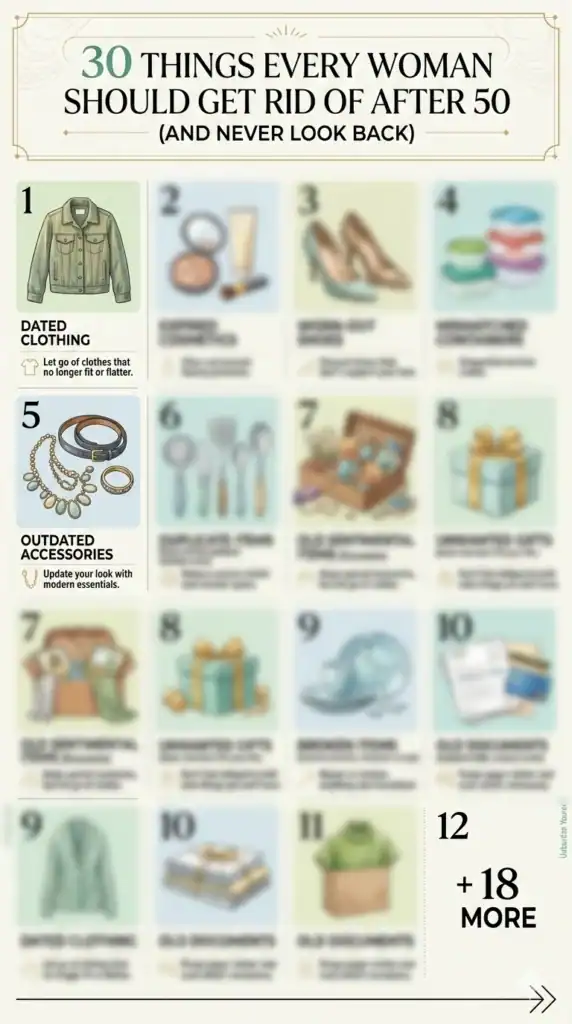
Reaching 50 brings a unique perspective, a wisdom earned through years of experience. This powerful time in a woman’s life offers a chance to shed what no longer serves her, creating space for greater joy, authenticity, and peace. It is time to release the burdens of the past and step confidently into your most fulfilling years yet.
1. Ill-Fitting Undergarments
For too long, many women have tolerated bras and underwear that pinch, bind, or simply fail to provide proper support. These foundational pieces, though hidden, dictate how your clothing fits and, more importantly, how you feel about your body throughout the day. A sagging bra can make even the most expensive outfit look less polished, while uncomfortable briefs distract from your focus.
Investing in a professional bra fitting is a small step with significant returns. Your body changes over the years, and what fit perfectly in your thirties or forties likely isn’t the ideal choice now. Seek out a lingerie specialist who understands the nuances of mature figures and can recommend styles that offer both comfort and attractive shaping.

Free Download
Reset your home in 30 days, free guide inside
Daily tasks, Londi Method tips, and affirmations for every room. Enter your email and it downloads instantly.
Get rid of anything with stretched elastic, torn lace, or visible signs of wear. Discard items that dig into your skin or ride up persistently. Keeping just a few well-fitting, high-quality sets will make a noticeable difference in your posture, comfort, and overall confidence. You deserve to feel supported and comfortable in every layer you wear, from the inside out.
2. Outdated Makeup Products
Many women cling to makeup products they’ve used for decades, often without realizing how much formulations and trends have shifted. Heavy foundations or powder that once worked might now settle into fine lines, making them more prominent. Similarly, harsh eyeliners or overly matte lipsticks can create a dated or severe look that doesn’t flatter a mature face.
Take a critical look at your makeup bag. Are you still using the same frosty blue eyeshadow from the 80s, or a foundation that’s several shades too dark? Expired makeup can also harbor bacteria, leading to skin irritation or breakouts. Most products have a small symbol indicating their shelf life after opening, usually 6-12 months.
Discard anything that’s past its prime, smells off, or simply doesn’t make you feel good when you wear it. Experiment with lighter foundations, cream blushes, and hydrating lip colors. A subtle update to your makeup routine can brighten your complexion and refresh your appearance, helping you feel more vibrant and current without trying to look younger than you are.
3. Uncomfortable Shoes
Life is too short for shoes that cause pain, blisters, or bunions. Yet, countless women continue to hobble through their days in footwear that prioritizes fleeting fashion over enduring comfort and foot health. High heels that once seemed manageable can now lead to back pain, joint issues, and a general reluctance to move freely.
It is time to be ruthless with your shoe collection. Any pair that pinches, rubs, or leaves you limping by midday needs to go. This includes those gorgeous heels you only wear once a year because they hurt so much. Your feet support your entire body, and their well-being directly impacts your mobility and overall quality of life.
Prioritize shoes with proper arch support, cushioning, and a comfortable toe box. Look for stylish flats, elegant low heels, or chic sneakers that allow you to walk with ease and confidence. You can still have fashionable footwear without sacrificing your comfort or long-term foot health. Your ability to move freely is far more valuable than any fleeting trend.
4. Clothing That No Longer Fits
The closet of many women over 50 often contains a collection of ‘someday’ clothes: items from a different size, a different lifestyle, or even a different decade. These pieces, whether too small or too large, hang there as silent reminders of a past self or an aspirational future that may never arrive. They clutter your physical space and can subtly weigh on your psyche.
Holding onto clothes that don’t fit now is counterproductive. If they are too small, they can breed feelings of inadequacy or pressure. If they are too large, they suggest a self-acceptance deficit. Your body has changed, as bodies do, and that is perfectly normal. Dress for the body you have today, with grace and appreciation.
Go through your wardrobe with an honest eye. Remove anything that doesn’t fit comfortably or flatter your current shape. Donate good quality items, mend what can be saved, and discard the rest. Create a wardrobe where every single item makes you feel good and confident, rather than serving as a monument to past sizes or future hopes.
5. Damaged or Broken Household Items
Many homes accumulate a surprising number of items that are broken, chipped, cracked, or simply not functioning as they should. This might include a teacup with a missing handle, a lamp with a frayed cord, a wobbly chair, or an appliance that only works sporadically. These items often sit in a corner, waiting to be repaired ‘someday,’ but that day rarely arrives.
Keeping damaged items serves no practical purpose and often contributes to a subtle sense of disarray or unresolved tasks. They are constant visual reminders of something incomplete or imperfect. They also take up valuable space that could be used for items that truly bring joy or utility.
Take an afternoon to gather all such items. Decide what can be genuinely repaired within a realistic timeframe. For everything else, either discard it or donate it for parts if appropriate. Prioritize having a home filled only with things that are fully functional and aesthetically pleasing. Your living space should be a source of comfort, not a graveyard of broken promises.
6. Unused Subscriptions and Memberships
In this age of digital convenience, it is incredibly easy to sign up for streaming services, gym memberships, online magazines, or software subscriptions. However, many of these, after an initial period of use, slowly fade into the background, continuing to deduct money from your account without providing any real value. They become an invisible drain on your finances and often contribute to digital clutter.
Review your bank statements and credit card bills carefully. Identify every recurring payment. Are you truly using that second streaming service? Do you go to the gym often enough to justify the monthly fee? Is that premium app subscription genuinely making your life better, or did you forget you even had it?
Cancel anything you are not actively using or that no longer brings you joy or benefit. The money saved can be redirected towards experiences you value, or simply kept in your pocket. Clearing out these unused subscriptions not only saves money but also creates a sense of financial control and intentionality in your spending.
7. Toxic Friendships
As you age, your priorities shift, and your tolerance for drama or negativity should rightfully diminish. Toxic friendships, characterized by constant criticism, manipulation, one-sided giving, or pervasive negativity, are a significant drain on your emotional and mental energy. These relationships often leave you feeling exhausted, undervalued, or anxious after every interaction.
Assess your close relationships with an honest heart. Do certain friends consistently bring you down, gossip relentlessly, or only reach out when they need something? True friendship should be a source of mutual support, joy, and understanding, not a constant source of stress or obligation. It is okay for friendships to naturally evolve or even conclude.
It may be difficult, but releasing yourself from these emotional burdens is crucial for your well-being. You do not need to make a grand announcement; sometimes a gentle distancing is sufficient. Prioritize relationships that uplift you, celebrate your successes, and offer genuine connection. Your emotional peace is a treasure worth guarding fiercely.
8. Past Resentments
Holding onto resentments, whether against family members, former colleagues, or even yourself, is like carrying a heavy, invisible burden. These unresolved feelings often stem from past hurts, perceived injustices, or unfulfilled expectations. They fester in the mind, coloring present experiences and preventing you from fully enjoying peace and contentment.
Resentment does not punish the person you resent; it primarily harms you. It keeps you emotionally tethered to past events and prevents you from moving forward with a light heart. The energy spent reliving old grievances could be directed towards building a more positive and fulfilling present.
Consider forgiveness, not necessarily as an act that absolves the other person, but as a gift you give to yourself. This might involve an internal process, or if appropriate, a conversation that seeks understanding rather than blame. Releasing old resentments frees up emotional space for new joys and peaceful acceptance. It is a powerful act of self-care and liberation.
9. Guilt Over Past Choices
Many women carry a quiet burden of guilt over decisions made decades ago. Perhaps it is a career path not taken, a parenting choice you now second-guess, a relationship decision you regret, or simply words spoken in anger. This guilt, while a natural human emotion, can become a constant companion, whispering doubts and what-ifs into your ear.
Understand that every decision you made in the past was made with the information, experience, and emotional capacity you had at that precise moment. You did the best you could, even if hindsight offers a clearer, different path. Dwelling on past mistakes prevents you from living fully in the present and appreciating how far you have come.
Practice self-compassion. Acknowledge the choices, learn any lessons they offer, and then consciously release the guilt. You cannot change the past, but you can change how you relate to it. Give yourself the grace you would offer a dear friend. Freeing yourself from this heavy emotional baggage allows you to step into your future with clarity and self-acceptance.
10. The Need for External Validation
For much of our lives, we are conditioned to seek approval from others: parents, teachers, partners, colleagues, and society at large. This constant quest for external validation can become an exhausting cycle, where your self-worth is perpetually tied to someone else’s opinion or praise. It prevents you from trusting your own intuition and living authentically.
Turning 50 is an ideal time to reclaim your internal compass. You have accumulated a wealth of experience and wisdom. You know yourself better than anyone else does. Allowing others to dictate your value or direct your path diminishes your unique power and perspective.
Practice making choices that resonate with your inner self, regardless of what others might think. Recognize your own strengths and successes. Cultivate a strong sense of self-worth that comes from within, rather than from external accolades. When you release the need for constant approval, you discover a profound sense of freedom and self-respect.
11. Perfectionism
The pursuit of perfection, while seemingly noble, is often a self-defeating and exhausting endeavor. It sets impossibly high standards for yourself and others, leading to constant frustration, procrastination, and a fear of failure. Perfectionism can paralyze action, keep you from starting new things, and prevent you from celebrating achievements because they are never ‘quite good enough.’
Life is inherently imperfect, and so are we. Striving for excellence is admirable, but demanding perfection is a recipe for chronic dissatisfaction. It robs you of joy in the process and makes it difficult to appreciate the beauty of what is already good. This relentless drive often stems from underlying anxieties or societal pressures.
It is time to let go of the relentless need for everything to be flawless. Practice accepting ‘good enough.’ Give yourself permission to make mistakes, to be messy, and to be human. Focus on progress, not perfection. This release will free up enormous amounts of mental energy, allowing you to live more spontaneously, creatively, and peacefully.
12. Cluttered Spaces
Physical clutter often mirrors mental clutter. A home filled with too many possessions, disorganized piles, and crowded surfaces can create a subtle but persistent sense of overwhelm and stress. It makes it harder to find things, clean effectively, and relax in your own environment. This applies to every corner of your living space, from closets to countertops.
Clutter is more than just untidiness; it can represent deferred decisions, attachment to the past, or a fear of letting go. Each item demands a small piece of your attention and energy. Over time, this collective drain becomes significant, impacting your ability to think clearly and feel calm in your sanctuary.
Commit to a systematic decluttering process. Start small, perhaps one drawer or one shelf at a time. Ask yourself if each item is useful, beautiful, or brings you genuine joy. If not, release it. Creating more open, organized spaces in your home will bring a surprising amount of mental clarity, peace, and ease to your daily life.
13. Excess ‘Just In Case’ Items
Many women, particularly those who have lived through leaner times or simply grew up with a ‘waste not, want not’ mentality, accumulate a surprising amount of ‘just in case’ items. These are things you might use someday, for some unforeseen event, or for a vague future project. They include old buttons, spare parts for appliances you no longer own, or countless plastic containers without matching lids.
While a practical approach to life is valuable, an excess of ‘just in case’ items becomes clutter. These things take up precious storage space, create mental friction, and rarely serve their intended purpose. The ‘just in case’ mentality can often mask an underlying fear of scarcity or an inability to trust that you will be able to acquire what you need, when you need it.
Be realistic. If an item hasn’t been used in years and doesn’t serve an immediate, obvious purpose, it is unlikely to be needed. Free yourself from the burden of anticipating every possible future scenario. Release these items and create space for things that are truly useful or beautiful in your life today. Trust that you can handle future needs as they arise.
14. Cheap, Flimsy Accessories
After decades of life experience, it is time to upgrade your personal style beyond disposable fast-fashion accessories. Flimsy jewelry that tarnishes quickly, scarves made from scratchy synthetic materials, or handbags that fall apart after a few uses do not reflect the mature, sophisticated woman you have become. These items often look cheap and can detract from an otherwise well-composed outfit.
Instead of accumulating many low-quality pieces, invest in a few carefully chosen, well-made accessories that will stand the test of time. Think of classic leather belts, elegant scarves made from natural fibers, or timeless jewelry pieces. These items not only last longer but also add a touch of refinement and polish to any ensemble.
Go through your accessory drawer and be ruthless. Discard anything that is broken, tarnished, or clearly showing its age and poor quality. Keep only the pieces that make you feel good and genuinely complement your style. A smaller collection of quality items will serve you better and make dressing easier and more enjoyable.
15. Old Medications
The medicine cabinet in many homes often contains a graveyard of expired prescriptions, half-empty bottles of over-the-counter remedies, and long-forgotten vitamins. Keeping these old medications is not only a form of clutter but can also pose a significant health risk. Expired drugs can lose their potency or, in some cases, even become harmful.
It is crucial to regularly check the expiration dates on all medications, both prescription and over-the-counter. A common mistake is to save antibiotics from a previous illness, thinking they might be useful later. However, using incomplete courses or incorrect antibiotics can lead to antibiotic resistance or improper treatment for new conditions.
Gather all your old medications and dispose of them safely. Do not simply flush them down the toilet or throw them in the trash, as they can contaminate water systems or harm wildlife. Many pharmacies offer take-back programs, or you can check local guidelines for proper disposal. Keeping your medicine cabinet lean and current is a simple yet vital step for household safety and organization.
16. Expired Pantry Items
Just like medications, food items in your pantry, refrigerator, and freezer also have expiration or ‘best by’ dates. Many women find their cupboards filled with forgotten spices, ancient cans, stale crackers, or mysterious frozen packages. These expired items take up valuable space, contribute to clutter, and are certainly not contributing to healthy meals.
Regularly rotating your stock and checking dates is a good practice. Foods past their prime might not be dangerous, but they often lose flavor, texture, and nutritional value. An overstuffed pantry also makes it harder to see what you actually have, leading to duplicate purchases and food waste.
Dedicate time to a thorough pantry overhaul. Pull everything out, check dates, and discard anything that is old, opened too long, or looks suspicious. Wipe down shelves and reorganize. A well-organized, current pantry will make meal planning easier, reduce waste, and inspire more creative and healthier cooking. It is a small change with a big impact on your kitchen efficiency and health.
17. Unfinished Projects Gathering Dust
Many creative and ambitious women have a stash of unfinished projects: knitting that never got past the first few rows, a half-painted canvas, an uncompleted scrapbook, or a partially written manuscript. These projects, often started with enthusiasm, sit as silent accusations, reminding you of good intentions that lost momentum. They can become a source of guilt and a drain on your mental energy.
While it is wonderful to have creative aspirations, holding onto too many dormant projects can feel like a burden. They take up physical space and represent unfulfilled commitments. They can also prevent you from starting new, exciting ventures because you feel obligated to finish the old ones first.
Take stock of your unfinished projects. Be honest with yourself. Which ones do you still feel genuine passion for? Commit to finishing one or two of those. For the rest, give yourself permission to let them go. Discard the materials, donate them, or repurpose them. Freeing yourself from these lingering obligations will open up space for new interests and a lighter, more present mindset.
18. Digital Clutter
In our increasingly digital world, clutter is not just physical; it exists in our phones, computers, and cloud storage. This includes thousands of unread emails, duplicate photos, old documents, unused apps, and disorganized files. Digital clutter can be just as overwhelming as physical clutter, slowing down your devices and making it difficult to find important information.
An overflowing digital life can lead to stress, inefficiency, and a feeling of being constantly behind. Imagine trying to find a crucial document amidst a sea of old downloads, or missing an important email because your inbox is full of newsletters you never read. It drains your mental bandwidth without you even realizing it.
Dedicate regular time to digital decluttering. Unsubscribe from unwanted email lists. Delete duplicate photos and blurry shots. Organize your files into logical folders. Clear out old downloads and unused apps. A clean digital space can significantly reduce stress and improve your productivity, allowing you to focus on what truly matters online.
19. Negative Self-Talk
Perhaps one of the most insidious things to get rid of is the persistent habit of negative self-talk. This internal monologue often involves critical comments about your appearance, intelligence, capabilities, or past mistakes. Many women have unknowingly cultivated this harsh inner voice over decades, and it can profoundly impact self-esteem and confidence.
Negative self-talk undermines your potential and diminishes your joy. It creates a self-fulfilling prophecy, making you believe you are not good enough, smart enough, or worthy enough. This internal critic is often far harsher than any external critic and can be incredibly damaging to your mental well-being and willingness to try new things.
Becoming aware of this voice is the first step. When you catch yourself thinking unkind thoughts about yourself, consciously challenge them. Would you speak to a friend that way? Practice replacing negative thoughts with neutral or positive affirmations. Cultivate a kinder, more compassionate inner dialogue. This shift can be truly liberating, allowing you to live with greater self-acceptance and inner peace.
20. The Idea of ‘Shoulds’
For many women, life has been dictated by a relentless stream of ‘shoulds’: I should be a perfect mother, I should have a pristine home, I should pursue a certain career, I should always put others first. These internalized expectations, often absorbed from societal norms, family pressures, or self-imposed ideals, create an immense burden and can lead to chronic feelings of inadequacy.
These ‘shoulds’ are often not aligned with your true desires or values. They represent an external measuring stick against which you constantly judge yourself, preventing you from living authentically and pursuing what genuinely brings you joy. Trying to meet every ‘should’ leads to exhaustion and a sense of never being quite enough.
Take a moment to identify your personal ‘shoulds.’ Write them down. Then, ask yourself who imposed each one and if it still serves you. Give yourself permission to shed the ones that no longer resonate. Live a life guided by your own values and desires, not by external expectations. This act of liberation allows you to define your own path and find genuine contentment.
21. Fear of Trying New Things
As women age, a common trap is to settle into comfortable routines, allowing a quiet fear of the unknown to deter them from trying new experiences. This might manifest as avoiding new technologies, declining invitations to unfamiliar activities, or sticking strictly to what is familiar. This fear can limit personal growth and prevent you from discovering new passions and joys.
Life after 50 is an incredible opportunity for exploration and reinvention. Your children are grown, your career might be winding down, and you likely have more time and resources. Yet, the habit of caution can become deeply ingrained, making it difficult to step outside your comfort zone. This fear robs you of rich experiences.
Consciously challenge this fear. Start small. Try a new restaurant, learn a simple online skill, or take a different route home. Each small step builds confidence. You do not have to conquer Everest, but opening yourself to new possibilities will keep your mind agile, your spirit vibrant, and your life continuously interesting. The world still has so much to offer you.
22. Comparing Yourself to Others
In an age dominated by social media, comparing yourself to others has become an almost automatic habit, but it is a habit that profoundly damages self-esteem and happiness. You see curated highlights of other people’s lives—their perfect vacations, successful children, or seemingly flawless appearance—and use them as a benchmark against your own reality. This is a losing game.
Comparison steals your joy and fosters feelings of inadequacy or envy. It distracts you from appreciating your own unique strengths, accomplishments, and the path you have walked. Every individual’s journey is different, shaped by a distinct set of circumstances, challenges, and opportunities. You cannot compare apples to oranges and expect a fair assessment.
Consciously unfriend or unfollow accounts that consistently trigger these feelings. Focus your energy on your own growth and well-being. Celebrate your own victories, no matter how small they seem. Cultivate an attitude of gratitude for what you have and who you are. Releasing comparison frees you to live your life on your own terms, with genuine contentment.
23. Excessive Social Media Scrolling
While social media can be a valuable tool for connecting with loved ones and staying informed, excessive, mindless scrolling can quickly become a time-wasting, mood-draining habit. Many women find themselves falling into endless feeds, comparing their lives to others, or getting caught up in endless debates. This can lead to feelings of anxiety, inadequacy, and a general sense of time slipping away without purpose.
Think about the quality of time you spend on social media. Is it genuinely enriching your life, or is it a default activity when you are bored or procrastinating? The constant influx of information and often-negative content can overwhelm your mind and detract from real-world interactions and activities that bring genuine satisfaction.
Set boundaries for your social media use. Designate specific times for checking feeds, or use apps to track and limit your screen time. Unfollow accounts that do not add value or make you feel bad. Redirect that reclaimed time towards hobbies, reading, spending time in nature, or connecting with people face-to-face. Your attention is a valuable resource; use it wisely.
23 Cottage Style Mistakes Women Over 60 Make That Guests Notice →
24. Over-Scheduled Calendars
After decades of juggling career, family, and personal responsibilities, many women find themselves perpetually over-scheduled, even after major life transitions. An overly packed calendar, filled with back-to-back appointments, social obligations, and commitments, leaves little room for spontaneity, rest, or simply ‘being.’ This constant busyness can lead to exhaustion and burnout.
An over-scheduled life often stems from a fear of missing out, a desire to please everyone, or a long-standing habit of always being productive. However, a life without white space is a life without reflection, creativity, or true relaxation. You need time to recharge, to think, and to simply exist without a task list looming.
Ruthlessly prune your calendar. Learn to say no to new commitments that do not genuinely excite you or align with your values. Delegate tasks where possible. Intentionally block out time for rest, hobbies, and unstructured leisure. Creating space in your schedule is not laziness; it is an act of self-preservation and allows for greater joy and presence in your life.
25. Unread Books You Will Never Read
The ‘to be read’ pile, or TBR pile, is a common sight in many homes, often overflowing with books acquired with good intentions but never cracked open. These might be gifts, impulse buys, or books that once interested you but no longer align with your current tastes. While aspiring to read more is wonderful, a towering stack of unread books can become a subtle source of guilt or pressure.
These unread books take up valuable physical space and mental energy. Every time you see them, they are a reminder of an unfulfilled task, subtly whispering that you are not reading enough or not keeping up. Your reading tastes and interests naturally evolve over time, and it is perfectly okay for a book that once appealed to you to no longer hold your attention.
Go through your collection. Be honest about which books you genuinely intend to read in the near future. For the rest, consider donating them to a library, a friend, or a charity shop. Free up that space and mental bandwidth. Keep only the books that genuinely excite you and are a realistic part of your current reading plans. A smaller, more intentional collection feels lighter and more inviting.
26. Old Hobbies That No Longer Bring Joy
Throughout life, we pick up hobbies and interests, sometimes because we genuinely enjoyed them, and sometimes out of obligation or social expectation. However, as you reach your fifties, it is important to reassess whether these long-standing activities still bring you genuine joy, relaxation, or fulfillment. Continuing a hobby simply out of habit or a sense of duty can be a drain.
Perhaps you once loved a particular craft but now find it tedious, or you joined a book club that has become more about obligation than shared passion. Holding onto these activities, and the supplies that come with them, can prevent you from exploring new interests that might be a better fit for who you are now. Your time and energy are precious resources.
Be honest with yourself about what truly sparks your enthusiasm. Give yourself permission to gracefully step away from hobbies that no longer resonate. Donate the supplies or pass them on to someone who will enjoy them. This creates space and mental freedom to discover new passions that genuinely invigorate you and enrich your life in this vibrant new chapter.
27. Items With Bad Memories Attached
Many women keep items in their homes that are linked to painful or negative memories. This could be a gift from an ex-partner, an heirloom from a difficult family situation, clothing worn during a traumatic event, or even decor that reminds you of a time of struggle. These objects, though inanimate, can subtly influence your mood and energy, acting as anchors to the past.
Your home should be a sanctuary, a place of peace, comfort, and positive energy. Keeping objects that trigger sadness, anger, or anxiety undermines this purpose. These items, even if stored away, can hold a lingering emotional charge that impacts your subconscious and prevents you from fully moving forward.
Go through your belongings with an eye toward emotional resonance. If an item consistently brings up negative feelings, no matter its monetary value or sentimental history, it is time to release it. You do not need physical reminders of past hurts. Discard, donate, or give away these items, and intentionally fill your home with objects that evoke joy, warmth, and good memories. This act is a powerful step towards emotional freedom.
28. Pressure to Please Everyone
For many women, a lifetime of societal conditioning and personal experiences has instilled a deep-seated need to please everyone around them. This manifests as saying ‘yes’ when you mean ‘no,’ sacrificing your own needs for others, or constantly seeking approval. This relentless pressure to be agreeable and avoid conflict is utterly exhausting and often leads to resentment and self-neglect.
Constantly trying to please everyone is an impossible task and ultimately unsustainable. It often comes at the expense of your own well-being, authentic desires, and personal boundaries. True self-respect comes from honoring your own needs and making choices that align with your values, even if it occasionally disappoints someone else.
This is the time in your life to prioritize your own peace and authenticity. Practice setting clear boundaries. Learn to say ‘no’ kindly but firmly. Understand that your worth is not tied to how much you do for others or how universally liked you are. Releasing the pressure to please everyone is a profound act of self-respect and self-preservation, allowing you to live a more authentic and joyful life.
29. The Expectation of Doing It All
For decades, many women have operated under the unspoken expectation that they must successfully manage a career, run a household, raise children, maintain relationships, and keep up with personal interests, all while appearing serene and unflustered. This unrealistic expectation, often self-imposed, leads to chronic stress, burnout, and a pervasive feeling of never being quite good enough.
No single person can truly ‘do it all’ perfectly, and trying to achieve this impossible standard is detrimental to your mental and physical health. It leaves little room for rest, mistakes, or simply enjoying life’s simple pleasures. This relentless drive robs you of genuine contentment and often leads to a constant state of overwhelm.
Release the burden of this unrealistic expectation. Delegate tasks, ask for help, and accept that some things will simply not get done to perfection, and that is absolutely fine. Prioritize what truly matters to you and let go of the rest. Understand that true strength lies in knowing your limits and valuing your well-being. This freedom allows you to live with greater ease and genuine satisfaction.
30. The Belief That Your Best Years Are Behind You
Perhaps the most critical thing a woman over 50 should get rid of is the ingrained belief that her best years are somehow in the past. This insidious notion, often perpetuated by societal messages, can lead to a sense of resignation, a reluctance to try new things, or a feeling that life’s most exciting chapters are closed. It is a belief that fundamentally limits your future potential and joy.
This age is not an ending; it is a powerful new beginning. You possess a wisdom, resilience, and clarity that younger generations are still striving to acquire. You have the freedom, perspective, and often the resources to pursue passions, build new connections, and experience profound personal growth that was simply not possible in earlier, more demanding decades.
Challenge this limiting belief with every fiber of your being. See this stage of life as an opportunity for reinvention, adventure, and deep fulfillment. Focus on what you gain with age: confidence, freedom, and a clear sense of self. Your best years are not necessarily behind you; many of them are still waiting to unfold.